The Newsroom Didn't Die. It Dispersed
The gatekeepers are gone. The cameras are everywhere. And the most important stories of the last decade weren't broken by journalists... They were broken by people who happened to be standing in the right place. Here's what that actually means...
Inside This Dispatch
Every revolution has its medium.
The printing press gave Luther his audience. The telegram gave wars their front pages. Television gave assassinations their witnesses. The smartphone gave everyone a byline.
This is not a metaphor. It is a structural shift so fundamental that most institutions haven't finished processing it yet.
The Newsroom Is Not Where You Think It Is
In 2005, there were roughly 55,000 full-time newsroom employees in the United States. By 2023, that number had fallen below 28,000. Six newspapers close every week. Local television news budgets have contracted so severely that in some American counties, no journalist has set foot in a courtroom in years.
The coverage didn't disappear with the journalists.
The coverage moved.
It moved onto smartphones. Onto social platforms. Into WhatsApp groups and Discord servers and Ring doorbell footage and dash-cam loops. The apparatus of news gathering didn't collapse. It democratised - chaotically, imperfectly, and without anyone's permission.
The question was never whether citizen journalism would replace institutional media.
The question was always: what happens when it already has?
The Footage Was Never the Problem
Consider what the last decade of news actually looked like.
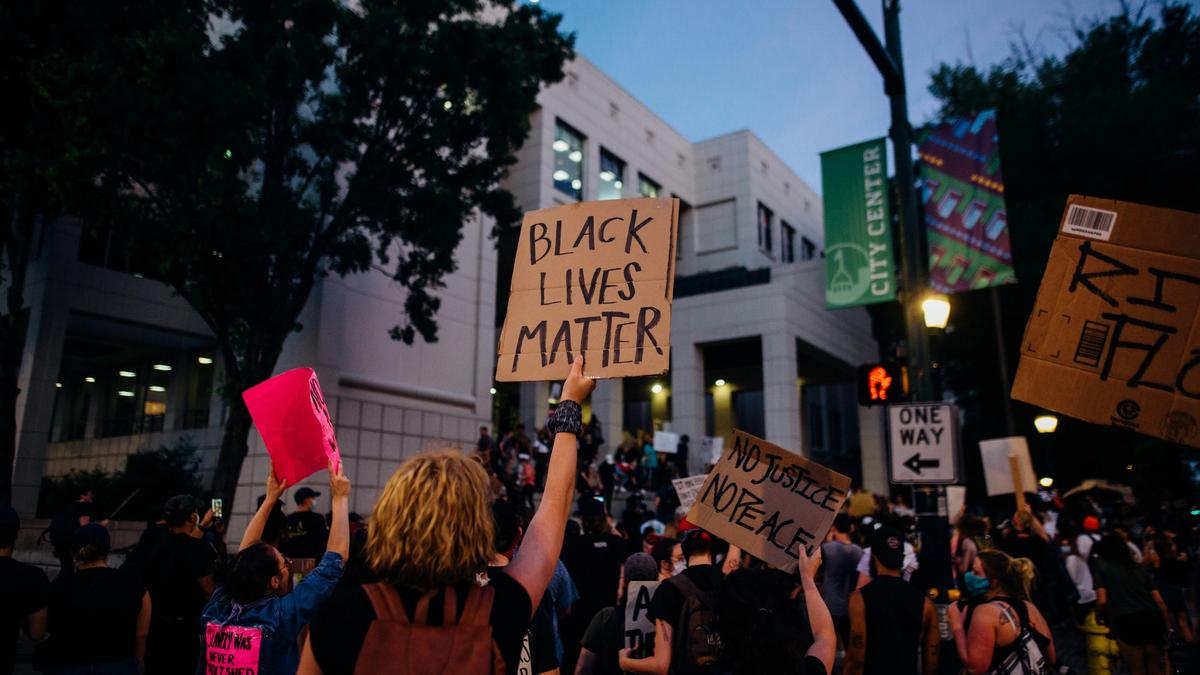
George Floyd. The Uyghur detention facilities. The Beirut explosion. The fall of Kabul. The first hours of the January 6th Capitol breach. The Turkish earthquake. The Wagner mutiny convoy rolling towards Moscow.
In each case, the defining footage, the images that shaped public understanding, drove political consequence, landed on front pages.. Captured not by credentialed journalists but by people who happened to be standing there.
A bystander. A resident. A soldier with a phone. A commuter.
They were first. They were present. They were, in the most literal sense, the press.
What they were not was verified. Contextualised. Protected. Or fairly compensated.
The Gap That Actually Matters
This is where the conventional critique of citizen journalism goes wrong.
Critics focus on the content. The misinformation. The manipulation. The fake footage, the mislabelled clips, the images from different conflicts presented as current events.
These are real problems. But they are symptoms, not causes.
The cause is structural. There is no system nor architecture, no infrastructure connecting the person who captured something real to the institution that needs to publish it with confidence.
The journalist with the smartphone has the story.
The newsroom has the audience and the editorial standards.
Between them: nothing. A void filled by WhatsApp forwards and reverse image searches and Twitter threads and, increasingly, AI-generated alternatives that are cheaper and faster and completely fabricated.
The verification gap isn't a content problem. It's an infrastructure problem.
And infrastructure problems have infrastructure solutions.
What Verification Actually Requires
Verification in journalism has always rested on three pillars: provenance (where did this come from), integrity (has it been altered), and identity (who captured it and were they there). Traditional newsrooms solved these through institutional trust, staff reporters, known fixers, established stringers. As content increasingly originates outside those structures, each pillar requires a technological equivalent. Hardware-backed capture metadata, cryptographic integrity checking, and identity sequestration systems now exist that can replicate institutional verification at the point of capture rather than the point of publication.
The newsrooms that survive the next decade won't be the ones with the most reporters.
They'll be the ones with the best source infrastructure.
Not sources in the traditional sense.. The anonymous tip, the cultivated contact, the off-record briefing. But sources in the architectural sense. A verified, trusted, distributed network of people with eyes on the ground, in every city, at every event, in every conflict zone.
A network that can prove what it captured. When. Where. Without alteration.
The Correspondent Was Always the Product
Here is the thing the traditional media industry has been slow to admit.
The journalist was never the differentiator.
The access was.
Editors employed journalists because journalists had access — to press passes, to briefing rooms, to cultivated relationships, to the physical proximity that institutional affiliation provided.
Smartphones eliminated most of that access advantage overnight.
A resident of Mariupol in March 2022 had access no Western journalist could match. A bystander on a Minneapolis street corner in May 2020 had access no newsroom could have purchased or planned for.
The access has dispersed. Into the population. Into the everyday. Into the pockets of hundreds of millions of people who are, at any given moment, standing closer to the news than any editor sitting in a glass building in London or New York.
The correspondent was always the product. The industry just forgot to build the marketplace.
→ Since 2008, newspaper advertising revenue in the UK has fallen by 75%
→ 50% of local UK newspapers have closed since 2009
→ Reuters Institute Digital News Report 2024: 46% of people now get news primarily from social platforms
→ User-generated content now appears in over 80% of major breaking news stories within the first hour of an event
→ Average time from event to first UGC upload: 4 minutes. Average time to first verified agency report: 47 minutes
→ The gap between those two numbers is where the misinformation crisis lives
The Question Nobody Is Asking
Everyone is asking: how do we stop misinformation?
Nobody is asking: how do we make citizen journalism trustworthy by design?
These are not the same question.
The first is defensive. It assumes the problem is too much unverified content and seeks to reduce or filter it.
The second is structural. It assumes the content is coming regardless and asks how to build the infrastructure that makes it credible before it publishes.
The difference matters enormously.
Because the footage is coming. The eyewitness reports are coming. The smartphone dispatches from places no journalist will ever reach in time are coming.
The only question is whether they arrive with proof attached or without it.
What Comes After the Newsroom
Nepal elected an interim Prime Minister through a Discord server. That happened. Not as a thought experiment. Not as a warning. As a fact, in September 2025, in a country where the apparatus of institutional governance had simply become too broken to command legitimacy.
The story was broken by citizens.
Organised by citizens.
Verified, imperfectly, messily, but genuinely - by citizens.
It would be easy to dismiss this as an anomaly. A political curiosity from a small country with specific circumstances.
It would also be wrong.
Because what Nepal demonstrated is not that Discord can replace a parliament. It demonstrated something more unsettling for established institutions everywhere.
That when the architecture of participation is broken, people don't wait for someone to fix it.
They build a new entrance.
Journalism is not immune to this. The architecture of participation in news, the press pass, the editorial gatekeeping, the institutional affiliation that confers credibility... Is breaking in exactly the same way.
And people are already building the new entrance.
They have been for years.
They just haven't had the infrastructure to make what they build trustworthy.
That is the problem worth solving.
Not how to slow the dispersal of the newsroom.
But how to make the dispersed newsroom credible enough to matter.
Common Clarifications
What is the "verification gap" in modern journalism?
The verification gap is the structural void between the raw smartphone footage captured by citizens and the rigorous editorial standards required for institutional publication. While the "access" to news has dispersed to billions of people, the infrastructure to prove its credibility hasn't caught up; leaving a void filled by misinformation.
How has newsroom employment changed since 2005?
US newsroom employment has collapsed by nearly 50%, falling from roughly 55,000 full-time employees in 2005 to fewer than 28,000 by 2023. This shift indicates that the newsroom hasn't died, but has instead "dispersed" out of traditional buildings and into the pockets of anyone with a smartphone.
Can citizen journalism actually replace traditional media?
Citizen journalism isn't a direct replacement for institutional media; it is becoming the primary source layer beneath it. The challenge is no longer about gathering footage - which is now everywhere... but about building the architecture that makes dispersed, citizen-led reporting trustworthy by design.
Sources & Intelligence
Signal From Extra Scoop Editorial
The Extra Scoop Editorial Board delivers investigative analysis, technical breakdowns, and deep-dive reporting on synthetic media, digital provenance, and cybersecurity.